

Designing a Pre-Collision Warning Interface for Mining Vehicles
A look at the key decisions behind designing a computer-vision-assisted collision warning interface during a brief design sprint. The case study explores presenting risks clearly, balancing warning visibility with distraction, and integrating essential vehicle information. As the system remained in development, the decisions represent early design reasoning rather than validated outcomes.
Note: No confidential client data, operational footage, site configurations, or proprietary computer-vision details are disclosed. All site imagery and visuals were replaced, simplified, or recreated solely to demonstrate the interaction approach.
Context & Problem
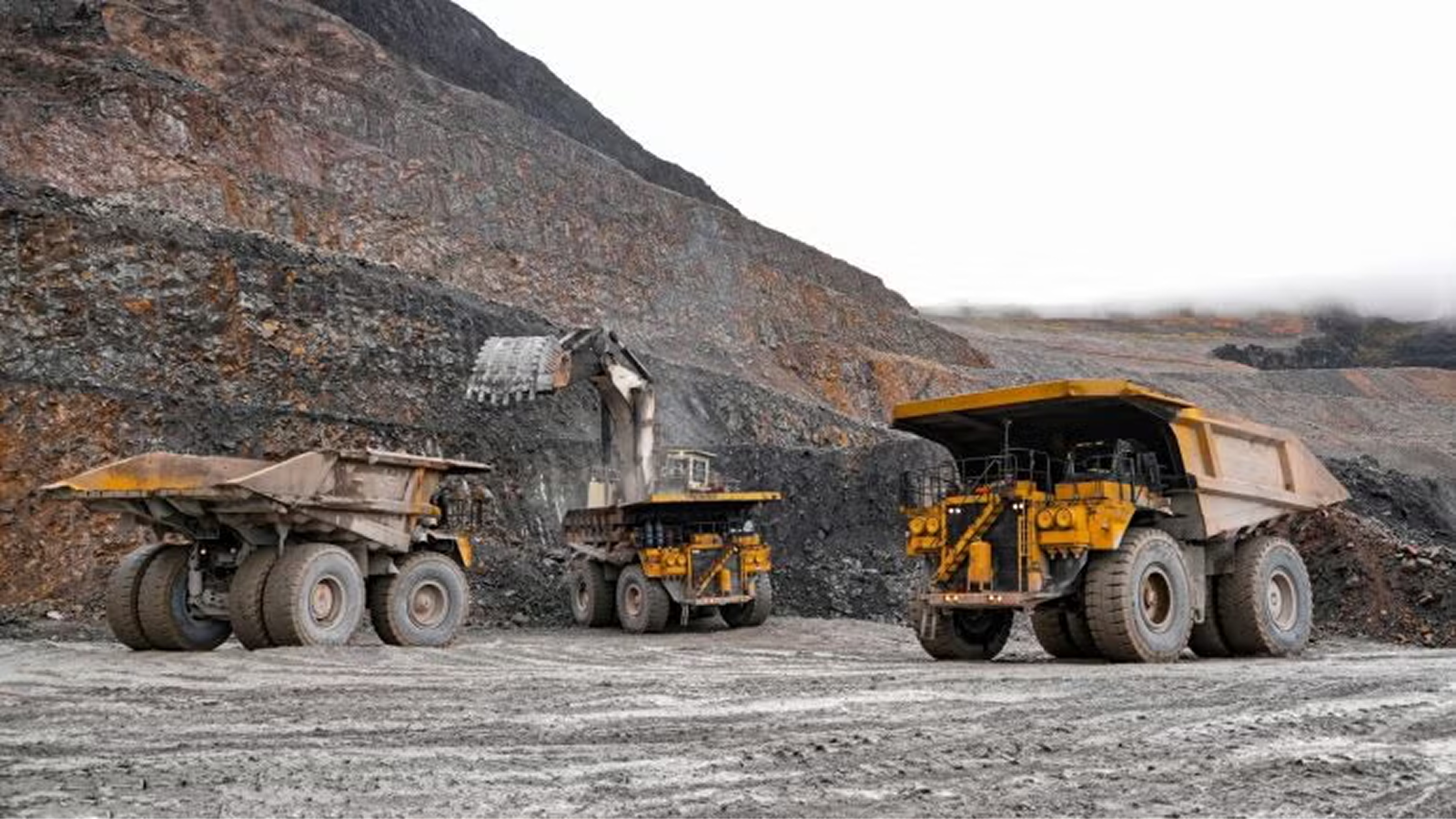
Mining sites are high-risk environments where drivers operate massive vehicles with limited visibility, constantly navigating around trucks, machinery, dust, uneven terrain, and unpredictable movement. Even small lapses in awareness can lead to severe collisions with costly operational and safety consequences. The challenge was designing a real-time assistance system that could help drivers immediately perceive nearby hazards through live camera feeds enhanced with computer vision, while minimizing distraction and cognitive load during driving.
Solution & Impact
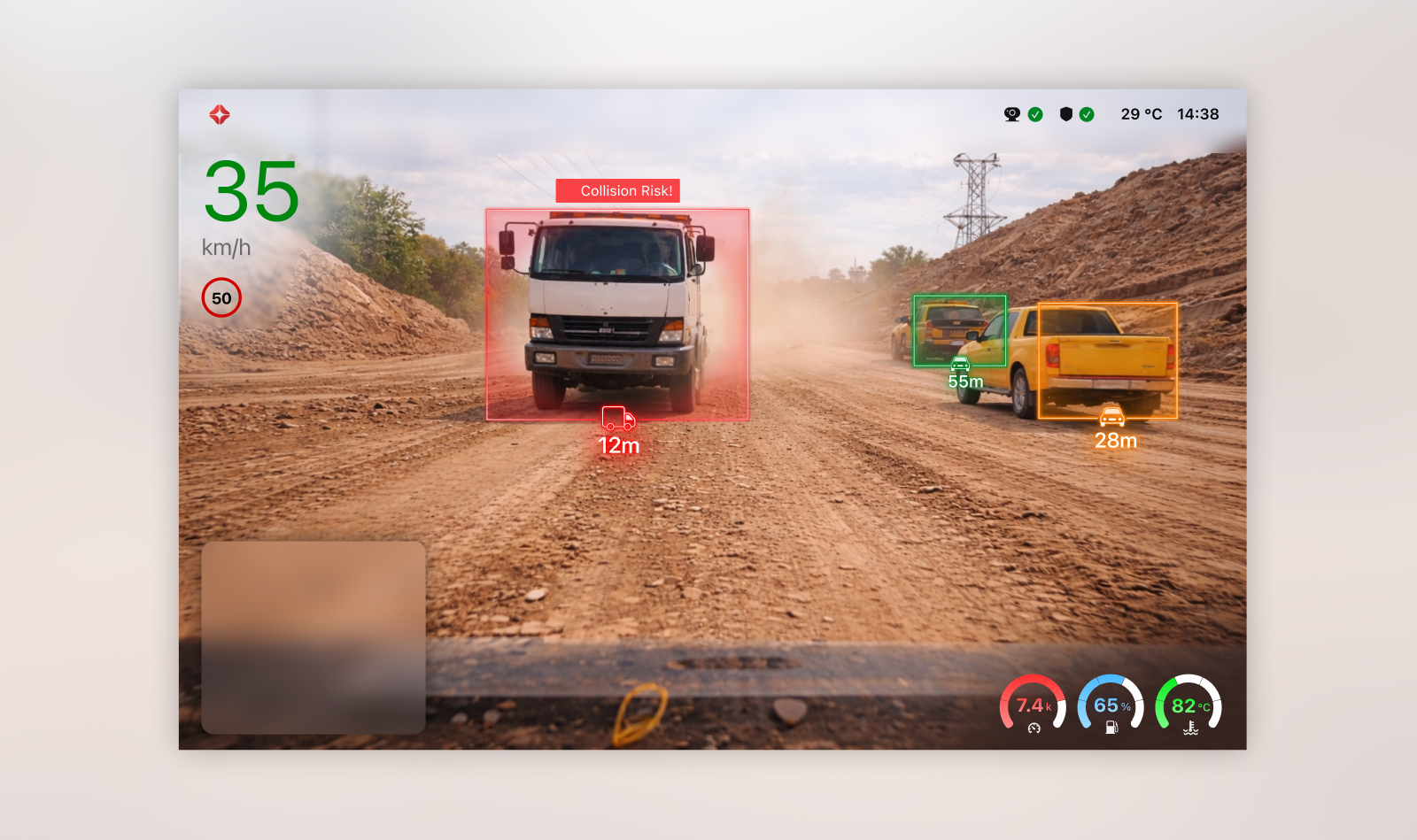
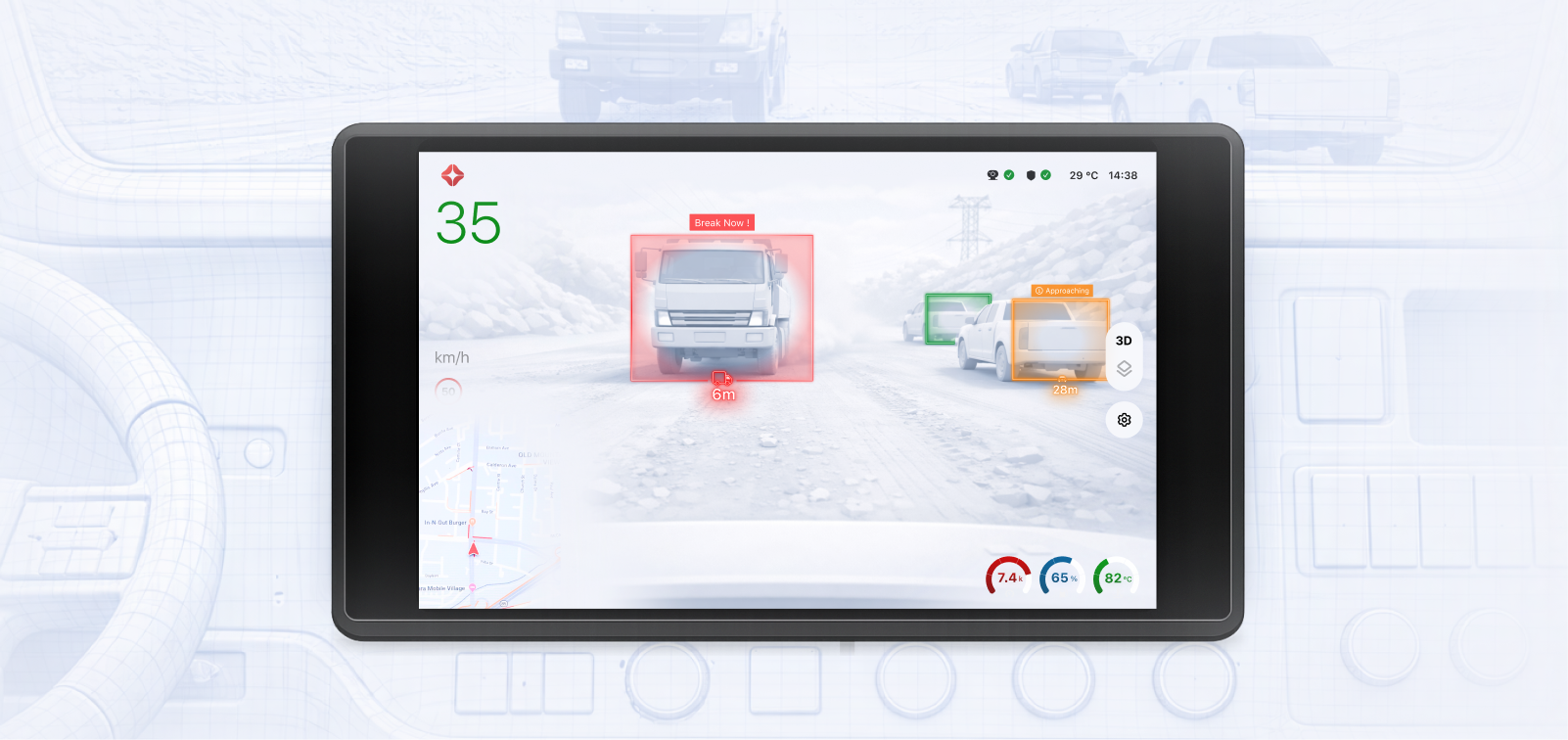
The proposed solution combined a live front-camera view with computer-vision detection to identify nearby vehicles, machinery, and potential collision risks. Detected objects were highlighted directly within the feed using proximity indicators and progressive visual and audio warnings, allowing drivers to locate emerging risks without shifting attention to separate panels. Essential vehicle telemetry, including speed, RPM, fuel, and engine temperature, was integrated into the same interface. At the time of writing, the system remained in development and had not been evaluated with drivers in real operating conditions. Its intended value is to improve hazard recognition and reduce attention switching, but no safety, usability, or operational impact is claimed at this stage.
Key Decisions & Tradeoffs
3D Visualization or Live Feed?
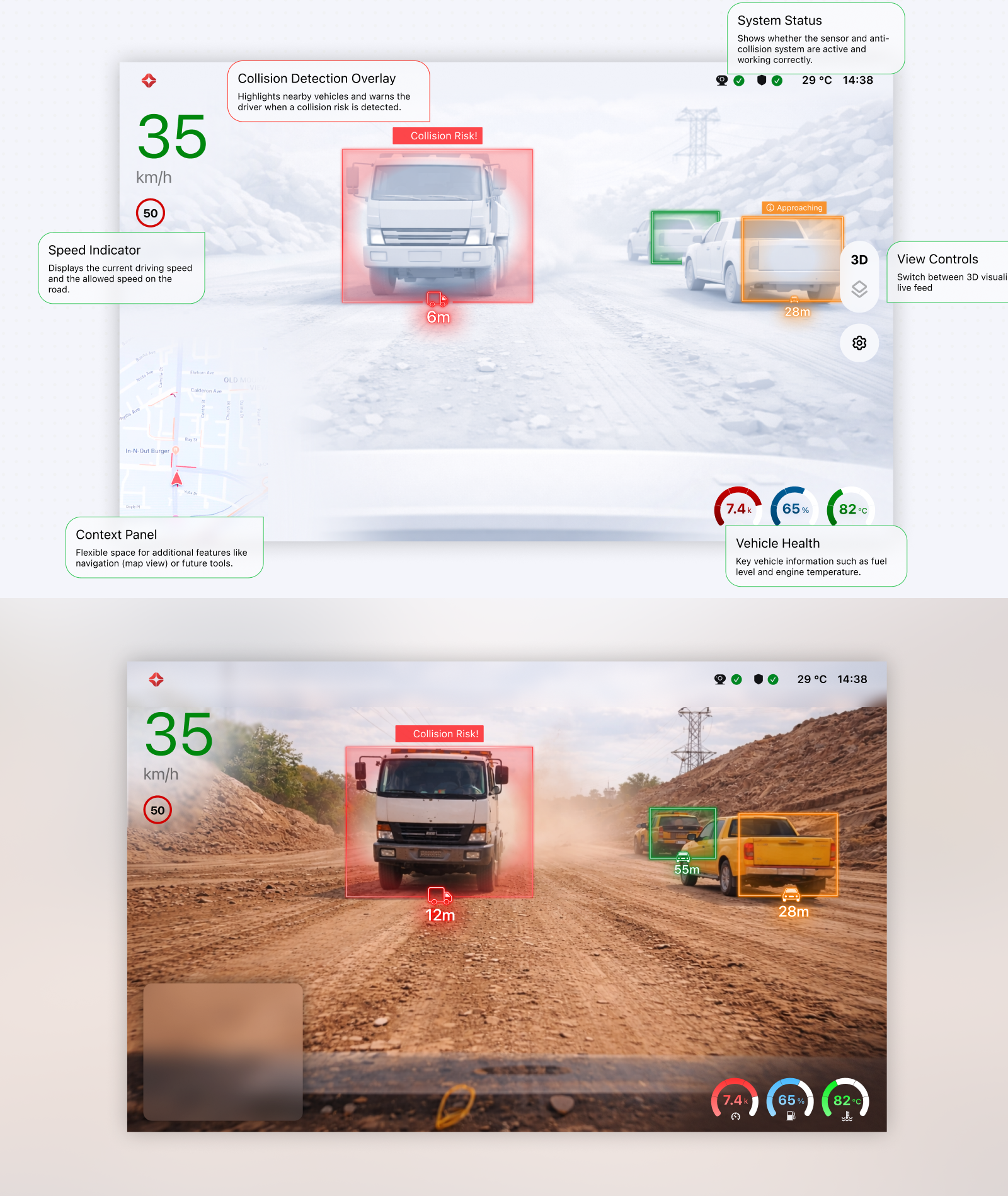
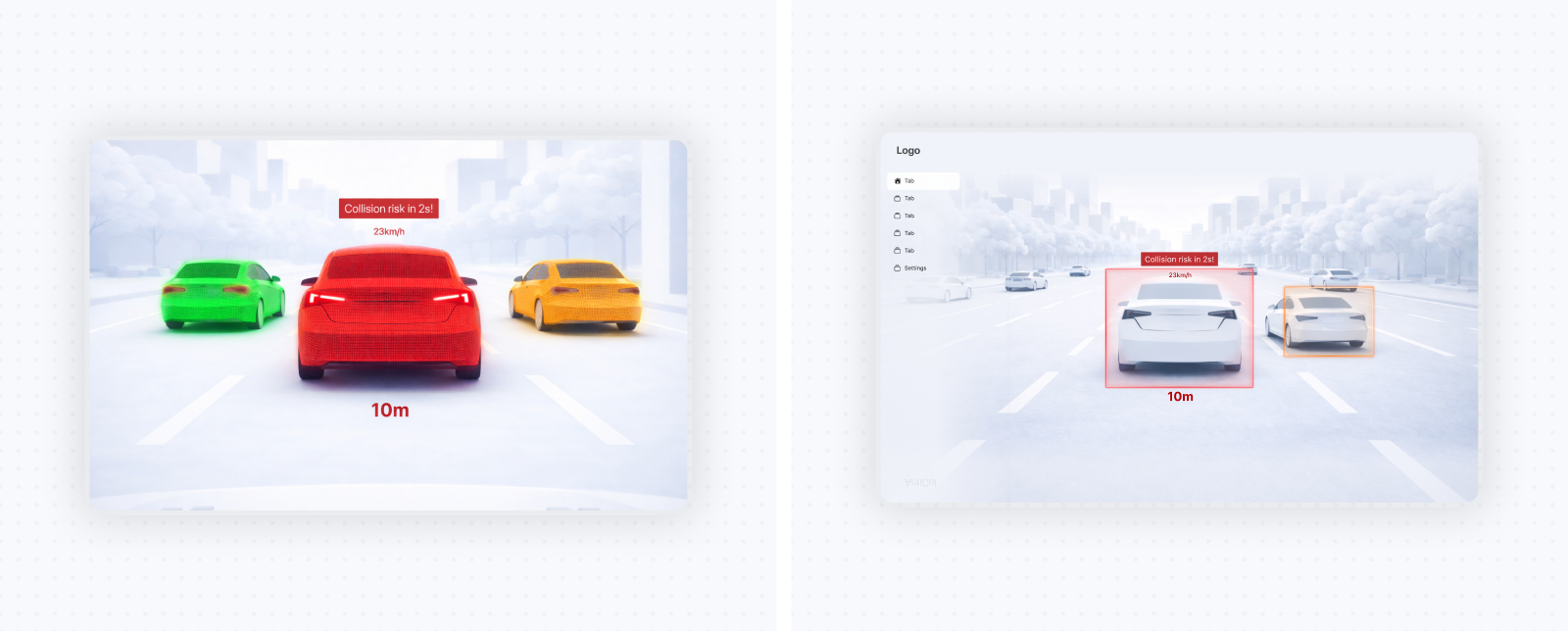
One of the earliest decisions was choosing between a simplified 3D perceptual visualization and the real live camera feed as the main driving view. I explored whether a spatial 3D environment could reduce visual clutter and represent risks more intuitively through simplified colored vehicles instead of traditional bounding boxes. It also had strong product differentiation potential. However, the approach introduced major implementation complexity and required technical investment the team could not support within the available timeframe. The project ultimately moved toward the live feed approach to prove the concept faster and avoid committing to a direction we could not reliably deliver. In hindsight, the live feed also preserved real-world context better and avoided replacing the scene with an unvalidated abstraction.
How to surface collision risk?
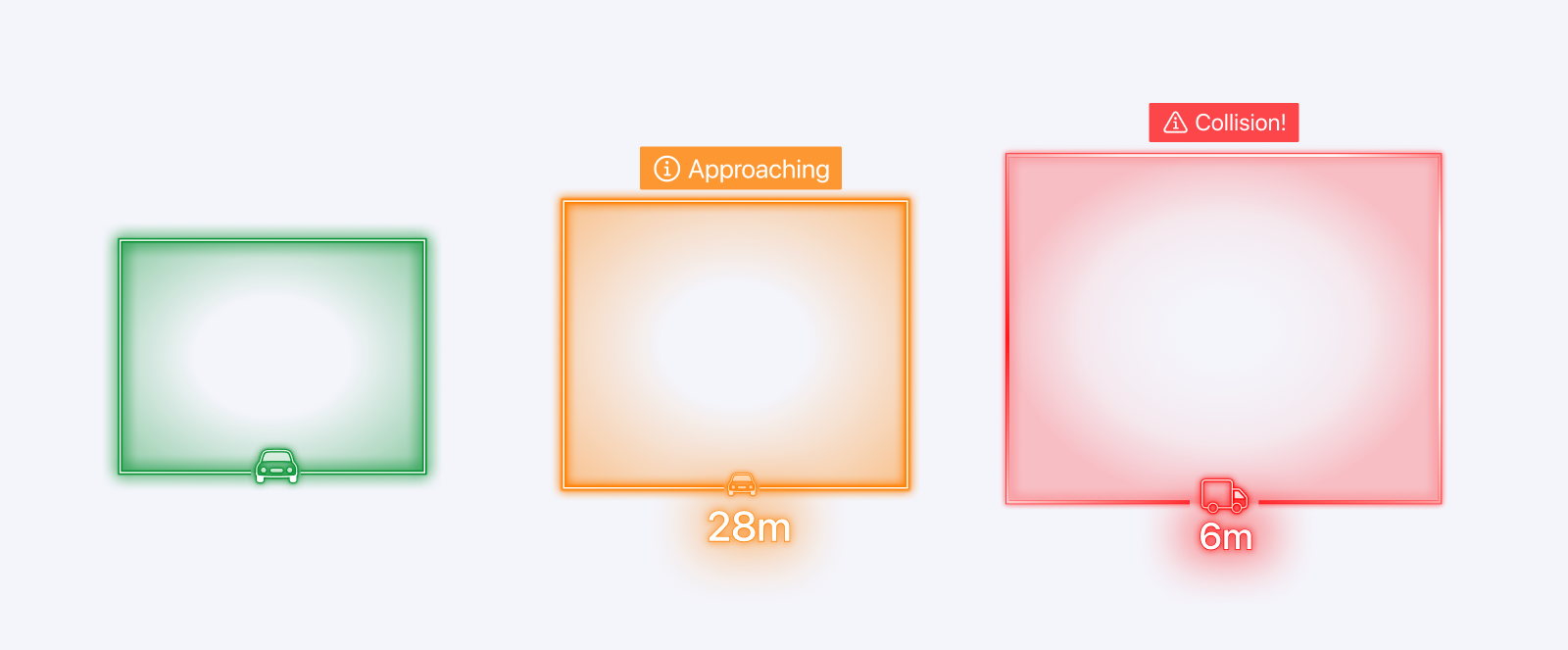
The live camera feed was treated as the primary interface instead of separating risks into side panels or lists. Although a separate panel would have kept the footage visually cleaner, it would have required drivers to shift attention and mentally connect each warning to an object in the scene. Collision information therefore appeared directly on detected objects through bounding boxes, distance indicators, and warning states, allowing drivers to identify both the risk and its location within the same view. To keep the feed readable, the overlay was limited to information needed for an immediate response. Additional system and vehicle information remained outside the camera view, while the in-situ annotations stayed visually connected to the detected object as it moved. This was intended to reduce the need to interpret alerts across disconnected parts of the interface.
Balancing detection feedback with warning urgency
The project required defining the collision-warning logic: when alerts should appear, escalate, or disappear. Small threshold or timing mistakes could either create unnecessary urgency through excessive warnings or reduce trust by reacting too late. A single binary warning was therefore insufficient for communicating risks that developed progressively. Early versions used green, orange, and red bounding boxes to communicate both object detection and collision severity. The persistent green state was intended to reassure drivers that the system was detecting nearby objects and estimating their distance. However, it still carried enough visual weight to compete with more important warnings and potentially reduce the impact of actual danger states.
The proposed system therefore used progressive warning levels. Lower-risk detections remained relatively subtle, while closer or more urgent risks introduced stronger visual treatments and audio feedback. At higher warning levels, the amount of information was intentionally reduced so drivers could recognize the danger without interpreting unnecessary detail during a high-focus situation. The exact safety thresholds could not be defined through interface design alone. Factors such as speed, direction of movement, vehicle type, and operational conditions could affect the actual risk. My role was to translate the available risk states into a clear escalation pattern, while the underlying thresholds required technical and operational validation. Because the project did not reach field testing, reducing the prominence of non-critical detections remained a recommended refinement rather than a validated outcome.
Integrating vehicle telemetry into the live feed
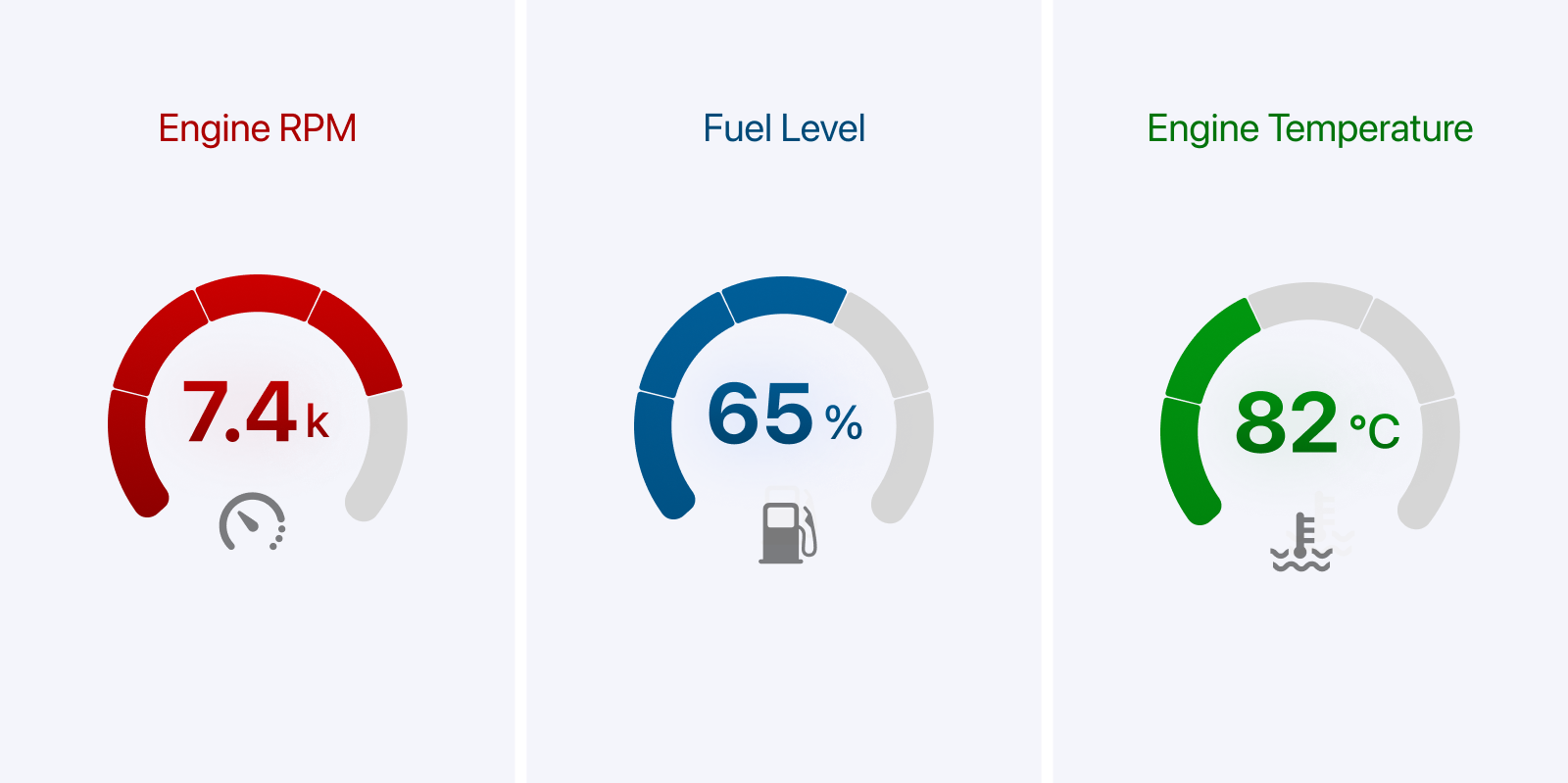
The live camera feed needed to remain the primary source of information, but drivers also required access to essential vehicle telemetry such as speed, RPM, fuel, and engine temperature. Integrating these values into the same interface helped the platform feel like part of the vehicle’s operational environment rather than an isolated collision-warning tool. To avoid unnecessary density, the scope was limited to the metrics considered most relevant during operation.
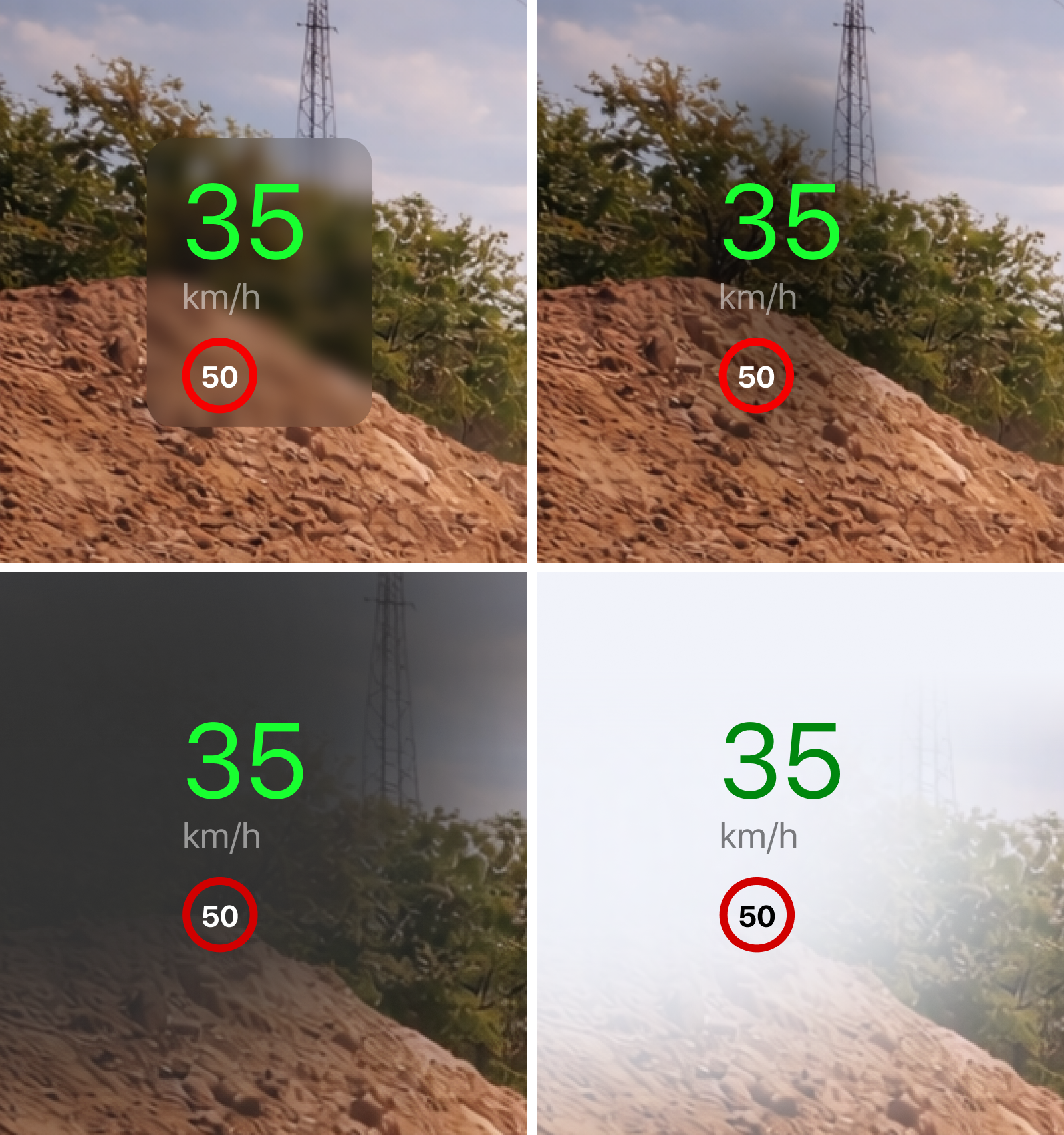
Another challenge was ensuring that telemetry and interface controls remained readable over camera footage that continuously changed in brightness, color, and visual complexity. I explored softer blending techniques using shadows and translucent overlays, but these treatments became unreliable across different backgrounds. The final direction used clearer visual separation and more stable containers to preserve legibility regardless of what appeared in the feed. I later refined the gauges and supporting controls to create a more cohesive visual hierarchy, keeping vehicle information accessible without allowing it to compete with collision warnings or the road ahead.
Future Improvements
The sprint prioritized a deliverable interface for the industrial context, but clarity, comfort, and trust still required evaluation with drivers. One limitation was coverage: a front-facing camera does not show the vehicle’s side and rear blind spots. Broader camera coverage and any alternative visualization would need technical and field validation before claims about collision-prevention performance could be made.
